



In the last post I introduced the concept of affordances. I will admit that my take on the concept is somewhat idiosyncratic. In the design of user interfaces (my favorite book on this topic is still The Design of Everyday Things by Donald Norman) the concept is mainly restricted to perceptions of function: door handles are for pulling (not pushing), door panels are for pushing (not pulling), and raising an electric window makes more “sense” when the switch is pushed forward rather than pulled backward. Having started using computers prior to touchscreens in “makes sense” to me that pulling down with my mouse will move me forward in a document. For my students pushing up is the more natural way of moving forward in a document. In other words, those who design objects for various functions do well to be aware of the responses that are typically occasioned by the perception of the user. We shouldn’t need a user’s manual for every on of the tools in our lives!

The active design of objects, though, also changes the affordances of a situation. Consider the design of the “bendy straw.” The illustration above (Patent #: US2094268 A) is from 1937, and was granted to Joseph B. Friedman. Mr. Friedman’s journey began with taking his young daughter to soda fountains. At the time milkshakes and other drinks were generally served out of tall bottles and / or glasses. Since straws were straight they elevated where drinking occurred. For a young drinker, tipping a glass filled with milkshake in order to get the straw to the mouth sometimes caused milkshake to spill out of the glass. However, bending the straw to the mouth was also not a solution. As Friedman writes in his patent application:
In order to drink in any satisfactory manner through the straw, it is either necessary to take the glass or bottle in the hand and tilt it, or to lean forward and bend the face down to contact the straw with the mouth. Either of these procedures is awkward and it is extremely common for the straws to become bent and broken over the rim of the bottle or glass during the consumption of the liquid. As the straws are substantially cylindrical such bending greatly obstructs the lumen of the straw and reduces the amount of liquid which can be drawn there through. (Friedman 1936, US patent application 2094268).
Friedman’s “aha” moment involved taking one of the paper straws of the day, inserting a screw, and tightly winding a string around the screw’s ridges. After removing the screw, one was left with a bendable straw. Mr. Friedman had intended that his bendy straw be used at soda fountains. One of the earliest adaptors, though, were hospitals because it became evident that bendable straws enabled bed-ridden patients to drink liquids while lying in bed.
However, rather than focusing on technology design, the psychologist who first proposed affordances as a term, James Gibson, mainly used the concept to capture a sense of what the external environment (i.e., its perception by the organism) “offers” the organism (see an excerpt here and Wikipedia here). Actions connected with threat and play, drowning and swimming, bathing, splashing, drinking, cooling off… all might be “afforded” to an individual by the sight of a pond. Gibson’s point was to stress that an animal is rarely, if ever, passively situated in its environment, and that action is a fundamental component of perception. As the environment changes so too do the potential behaviors.
My own use of the term in the last post leaned more in the design direction, while emphasizing that our evolutionary history, learning and maturation layer our perceptions with actionable meaning. But importantly, I tried to make the point that what is obviously the “correct” course of action – at least in terms of the most likely behavior to appear in a situation — might in fact be akin to an illusion. There are instances in which our perceptions conspire like a classical artist to restrict our attention to what resides within the painting’s ornate frame.

Given that brief aside, what I would like to do in this post is to consider the affordances of emotions and feelings. Just as we should be aware of and question the perceptual frame that weights our actions with regard to the external environment, so too should we question the perceptual frame that weights our actions with regards to our interoceptive environment. Notice that I am NOT referring to the affective affordances of external objects (see Carava & Benenti, 2024). I might feel the need to wallow in bout of melancholy romanticism and turn to the movie Before Sunset to help me experience this emotion. Or I might doom scroll through social media as a way of mitigating anxiety. Such affective affordances are not what I am referring to here. Rather, I would like to consider interoceptive feelings as their own perceptions that are capable of affording particular actions in their own right.

My stance will be the same as that taken in the last post – to consider interoceptive perceptions as differentially weighting different types of action. But also, I will want to hold on to a very broad definition of afforded actions. Just as an emotional response (fear of failure, fear of exposure, etc.) is an affordance that might be “suggested” to you by the prospect of having to speak up in class, our recall of particular memories and interpretative stances are also actions. Consider Duchamp’s urinal above. Part of the fame attached to this work of art concerns the interpretive expectations triggered by our perceptions. A Michelangelo sculpture affords a certain esthetic reverence. A urinal affords thoughts of contamination and excrement. Duchamp’s insight was to purposefully conflate the two. In considering the potential affordances of our visceral beliefs we will likewise attempt to hold on to an unrestricted notion of the potential action space.
For example, we all know that social behaviors such as communication are actions afforded to us by our interoceptive cues. A doctor asks us to report how much pain we are feeling on a scale of 1 – 10, or a friend asks us how we are feeling. “About a 7” and “Tired” might be the responses that our interoceptive perception affords. But of course, feeling possess more than just verbal affordances. Happiness affords smiles and anger affords scowls, and an infant cries in order to be held or because of gas pains or because of hunger (and it is up to the exasperated parent to determine which is which). In fact, we spend considerable time trying to train other behaviors to our internal perceptions in order to hide and control how and when we express our internal states. Since communicative actions are so obviously suggested by our interoceptive perceptions, I am not going to address them here. Instead, I would like consider three other, not so obvious actions afforded to us by our interoceptive perceptions: behavior systems, state-dependent memory, and interpretive projection.

Let’s begin just as we did with the last post with a puzzle. A rat in a cage is given a running wheel. Anyone who has had a pet rodent knows what happens. The rat will spend some time each day scurrying in the running wheel. What we are going to do, though, is run an experiment in which we force the animal to go hungry for some amount of time each day. Maybe we provide food for the animal for 4 hours per day, or maybe 2 hours per day, or maybe just 1 hour per day. Being good scientists, we have two groups of rats. For one group we do not provide a running wheel, and what we will observe is that all of the animals manage just fine. Those provided with food for only an hour per day, spend the majority of that time eating, while those given access to the food for 4 hours, will eat intermittently during those 4 hours. The important thing to note, though, is that all of these rats will maintain a stable body weight.

For our other group, we make one change. We provide these rats with a running wheel. What we will see in this group is a phenomenon known as activity-based anorexia (see Carera et al, 2014). First, greater food restriction will lead to greater time spent in the running wheel. In the graph below, the rats who are receiving 1 hour of food per day are running 10 km in their running wheels! What has also been shown, though, is that the rats in the 1 hour of food per day, will cease to maintain a stable body weight. In fact, if the experiment is not stopped, many of these rats will continuously lose weight, and eventually run themselves to death. How do we explain this?
One potential approach is via what is known as behavior systems theory (see Carbrera et al, 2019) Behavior systems can be thought of as the loose set of reflexes that are attached to functional states such as foraging, reproduction, status seeking, the rearing of young, and so forth. The figure below shows a set of behavior systems for foraging. Depending on the animal, the individual might start a bout of foraging by socializing before setting out with the group to look for food. Or the animal might search out a spot to lie in wait, hidden. Once a food item is located, though, a different set of behaviors come to the fore, and once a food item is being consumed, yet another set of behaviors become more likely. An astute observer will notice that behavior systems are simply affordances by another name.
So, let’s consider what perceptions might underpin the functional state that affords a particular behavior system. The sight of prey. The feel and smell of the food item, for sure. But what of the sensation of hunger, itself? To be placed into a functional state is to exist within a particular interoceptive perceptual space, and it is this perceptual space that is affording the behaviors in a behavioral system. Bucks during rutting season compete with other males and attempt to copulate with females. Horny teenagers congregate in packs and compete for status and attention. A child in a dark basement hears a sound and flees for the safety of the lighted steps. In each case, a functional state presumably correlates with a feeling state, and this feeling state affords actions just as much as the sight of a tea pot.

For example, from the figure above, an animal experiencing hunger is most likely to show general search behaviors. And (if you are rat) that means movement. Normally, these behaviors would cause prey or food to appear, and then normally the exteroceptive perception of this prey would lead to consumption behaviors. But in the laboratory, our poor animal is stuck. We have removed the normal contingencies of the behavioral system. The hungry animal increases its locomotion, but this does not produce a food item, and only serves to increase the interoceptive hunger cues, which in turn “suggest” the behavior of locomotion. It’s a vicious cycle, but one that is at least partially made sense of by appreciating that interoceptive perceptions (in this case, hunger) afford particular sorts of behavior just as much as exteroceptive perceptions do. It’s just that for whatever reason we tend to change our terminology. We don’t say that the hammer hitting our knee compelled us to kick out. But we do say that we felt compelled to eat the cupcake that was in front of us. The only difference, at least from within our discussion of affordances, is that in one case the perception is external while in the other the perception is internal. In both cases a behavior or set of behaviors is being strongly weighted (or primed) by the perceived situation.
So, when we speak of interoceptive “feeling states” (e.g., emotions, motivations) we should be aware that systems of behaviors are likely to be afforded to these internal “situations.” We feel guilt and behaviors that involve making amends will be suggested. We feel anger and behaviors that remove obstacles or exact payment will be suggested. We feel disgust and behaviors that lessen the likelihood of contamination will be suggested. We feel love and behaviors that care for the other will be suggested.
[Aside. I was educated in the behaviorist tradition, and therefore feel somewhat “dirty” using terminology such as “affordances” and “feeling states” and so forth. However, there are many flavors of behaviorism and I am much more aligned with the behaviorism of Clark Hull than B.F. Skinner. Hull made much use of “drive stimuli” in many of his models of learning, and what is a “drive stimulus” but an interoceptive perception / feeling state? Also, contra Skinner, I don’t think that operant conditioning is the be-all-and-end-all for understanding a behaving organism. For a nice summary of some of the current approaches to decision making and behavior see Redish, 2015). Finally, a crude behaviorism has a way of absenting the particular organism from the explanatory situation. Affordances to my thinking are more species specific, and do a better job of conceptually situating the individual organism in their immediate, perceived environment (internal and external).]
I am going to try and play with a few ideas in this post, but big picture, at their nexus lies a simple question: Do emotions have affordances, and if so, what are they? So, let’s start with affordances, but in a round-about way.
Imagine that you have been placed in a room. Two strings hang down from the ceiling a certain distance apart. In the room is also a chair and a pair of scissors. Your captor tells you that if you can grab ahold of both strings, they will let you free. The only problem is that the strings are positioned such that if you clutch one of the strings and walk towards the other, that other string remains just out of reach. What do you do?

Here’s another one. Below are nine dots arranged in a square. Your task is to take a pen or pencil (or use your mouse pad) and draw no more than 4 lines that connect all of the dots.

Or here is one more. You are a chimp living at the Anthropoid Station in Tenerife during WWI. A German researcher named Wolfgang Koehler has suspended a treat just out of your reach. Sometimes the treat is dangling up in the air, and crates are strewn about your enclosure. Sometimes the treat is on the ground beyond the enclosure’s fencing. In these cases there are sticks available. What do you do?

These types of problems are known as “insight problems.” Insight problems tend to have what is called an “ah-ha” moment. The person doing the puzzle repeatedly bangs their head against a wall, until suddenly the solution emerges as if in one conceived whole. The chimp might reach out towards the suspended treat. It might become visibly frustrated and hurl crates about the enclosure. What Wolfgang Koehler observed, though, was that sometimes after these displays, a chimp might pause and look back and forth between the crate (or stick) and the treat. After this pause, the chimp would suddenly go over to the crate, drag it under the treat, climb up, and pull the treat in. Or the chimp would grab the stick, reach out, and pull the treat into the enclosure. The learning (i.e., achievement of the desired outcome) was not gradual, but sudden. Take the problem of connecting the dots, remember that no one said that your lines couldn’t extend outside of the implied boundaries of the square. Or take the problem of the strings, no one said that a pair of scissors has to be used for cutting. Scissor handles can be tied to strings and used as a weight to start the string swinging.
There is a lot that could be said about insight problems and insight learning, levels of selection and units of selection. I wrote an entire master’s thesis-equivalent on the topic! And that was many, many years ago prior to much additional research that has come out since. For the purposes of this post, though, let’s just appreciate that one common aspect of insight problems is something known as “functional fixedness.” This is the idea that certain objects and situations “suggest” certain actions / behaviors. These suggestions can be more or less “strong.” We see a pair of scissors and the suggestion is, “Scissors are for cutting!” We see nine dots arranged in a square, and we assume that the implicit edges of the arranged dots are a boundary. For chimps, crates aren’t for dragging. Maybe for climbing on top of, but for dragging?? Really? And sticks. They are for poking. Maybe scratching. But for extending one’s reach in a generic sense? For Koehler, who belonged to a school of psychology known as the “gestalt psychology,” the rules (what I have termed “beliefs” in earlier posts) that constructed perceptions were central to how the environment made available different courses of action.
The functional fixedness that defines many types of insight problems essentially says that sometimes perception very strongly suggests particular actions. We see a button, we press it. We see a chair, we sit on it. We see a book, we open it (or throw it across the room). We see chalk and a chalk board, we write or draw on the board. Our perception isn’t just a description of the world, but also a call to action. It is this connection between perception and action that lies at the heart of the concept of affordances.

Or let’s come at this a different way by considering reflexes. We can think of reflexes as a particularly simple call to action, although reflexes, modal action patterns, and reflex chains can be highly complex. In this case were are not talking about “emitted behavior” or skills and habits that we have learned through trial and error, but rather “elicited behavior.” The suggestion from perception is an imperative: thou shalt use the scissors to cut! Only it’s not scissors but puffs of air to the eye, taps to the patella, the smell (to a male dog) of a female dog in heat, a viral invasion of a body, memories of a traumatic event, or the soft cloth to the motherless monkey… In each of these cases, perception mandates action, which is to say that the action feels involuntary. The eye blinks. The foot shoots up. The male dog jumps the fence and pursues the female. The immune system responds. The skin conductance goes up and the pituitary gland releases hormones. The soft texture evokes attachment / feelings of comfort and safety. And yes, emotions can be as much of a response as the blink of an eye – i.e., emotional responses are contained in an animal’s “affordances” as much as a stick may be used for poking and scratching and reaching and throwing and whittling. Perception suggests these behaviors, but also the behaviors of anger, contentment, sadness, stress, and humor. Emotions are responses and therefore suggestions for action made by our perceptions.

Zooming back out, though, the point here is that perception is not just a description of a world (and remember, exteroception perceives the world outside the body, while interoception perceives the world OF the body). Perception is also a weighted suggestion of all sorts of an actions — suggestions with differences in probability, urgency, intensity, and obviousness. Take reflexes. It might be reasonable to assume that our strongest call to action will be elicited by naturally occurring stimuli. A parental gull returns from foraging. The gull chicks peck at the red dot at the base of the parent’s yellow beak. The parent regurgitates food for the chicks to eat. Red dot on a yellow beak suggests pecking, or since we are talking about a reflex, red dot on yellow beak compels pecking in the hungry chick. Except it turns out that there are other perceptions that compel even more pecking. Affordances can be hacked. It turns out that more compelling than the naturally occurring red dot at the base of a parent’s yellow beak are several red lines drawn at the tip of a yellow rod. This, this is the better parent, at least if determined by the vigor of pecking made by the hungry gull chicks (Tinbergen & Perdeck).

The finding that the “best” stimulus for eliciting a reflex might not be a naturally occurring stimulus is captured by the idea of a supernormal stimulus. Basically, a supernormal stimulus is to reflexes what functional fixedness is to insight learning. Glue a long, white feather to a male grass finch’s head, and it becomes very attractive to females (Burley & Symanski). Provide a nesting oyster catcher with an unnaturally large egg, and it becomes the preferred egg to brood. Provide a female platyfish with a male to which you’ve affixed an artificial “sword tail,” and that males become highly desirable, compared to the normally swordless males (Basolo). There are many examples of supernormal stimuli that have been researched, and like visual illusions they tell us something about how our minds construct their beliefs about the world. In the case of affordances – that recursive network of perceptions to actions — whether we are aware of the whispered suggestions or not, our minds are an ecosystem of hows-to-engage.

Now, though, I would like to pivot. Normally, affordances are thought of in terms of exteroceptive perception, or perception of the world “out there.” A chair, the smell of baked bread, an approaching bear “suggests” certain types of behavior… and remember, emotions are a behavior. But we also have perceptions of the world “in here.” That it, we have feelings. Emotions in other words are both a suggested action, but also a perception. So, a reasonable question is what sorts of affordances are attached to these interoceptive perceptions. What are the affordances of anger, of delight, of boredom, of hunger, of body aches and a runny nose? I am going to argue for a couple of possibilities. First interoceptive states / perceptions broadly structure sets of behavior into behavior systems. Second, interoceptive states suggest certain types of memory recall (and yes, “remembering” is an action). Third, interoceptive states are fundamentally responsible for turning exteroceptive description into interpretation. That is, just as our brains actively fill in the blind spots of our exteroceptive, visual world, one of the actions called up by our interoceptive states is projection. We’ll get to all of these in the next blog post.

“Shroud of Turin reproduction” by Tirch is licensed under CC BY 2.0 
 .
.
Before me floats an image, man or shade,
Shade more than man, more image than a shade;
For Hades’ bobbin bound in mummy-cloth
May unwind the winding path;
(from Yeats’ “Byzantium”)
The threat emerges simply enough. A girl draws a mustache over the magazine image of a movie star to the laughter of her sister. A broken-hearted teenage boy takes an eraser to a photo of his former girlfriend. A political party Photoshops an opponent’s skin color to be just a shade darker. A dictator jails any who would deface his image, whether in words or in image, and when he is deposed, mobs throng a street in Baghdad in order to pull down his represented self. Like the harbingers of a human soul contained in the DNA of an ancient primate, it’s there, this threat, although perhaps hidden.
In ancient Byzantium, though, the threat was clear. An image, it was decreed, directed the eye away from the veneration of the authentically sacred. Representation, in short, was a very dangerous business indeed, and one that needed regulation. Down came the statues of saints and up went the plaster over the murals and mosaics. The adult equivalent of a child’s mustache? Certainly we can’t have that! Images are dangerous things. Inauthentic. Eyes might wander. Attention might stray. Interior landscapes might become polluted. We seek to call up wonder and in its place is the mustached celebrity. Perhaps. And yet, even in ancient Byzantium ambiguity clouded the imposed clarity of the holy decrees. What of the Shroud of Turin and the Mandylion — clothes said to bear the miraculous imprint of Christ’s visage? What of images of the Virgin Mary that spontaneously appeared on the columns of a church in Lydda? An emperor could not very well outlaw the artistry of God, himself! And if this act of artistic creation were true, if a representation could be a mirror that reflected a divine self, then the “child-like” actions of the Church could only be seen as a conspiracy of control rather than guides towards the authentic.
Authenticity vs conspiracy. Those are the poles of our threat. Seems? In this Elsinore world of ours nothing is as it seems. A father’s death is murder. Comets hide UFOs. A tower falls not because of the burning fuel of a jet, but because of the planted explosives of a government. Increasing choice is synonymous not with a broadening of agency, but with profits and branding. It’s the military, the government, the bankers, the Jews, the corporations, the mafia. And why stop there? The self? It is but the feedings of history: a forkful from the Romantics, a forkful from our place of birth, a forkful from an abusive parent. Open wide, here comes the choo-choo train! No, nothing is as it seems, and nothing is freely given. It is a maze of mirrors – which is to say, representations and images, one mirror after another, refracting our perception from the “real,” “authentic” earth and into belief. The first words of the diarist? Belief. The first edges constructed by our retinas? Belief. And yet, we know our own reflection, our own imprint exists. We are here, after all. The trouble is locating here. Let’s begin, then, with the maze.
I.

“TWA flight 800 reconstruction” by NTSBgov is marked with Public Domain Mark 1.0  .
.
Conspire
Etymology: Middle English, from Middle French conspirer, from Latin conspirare to be in harmony, conspire, from com- + spirare to breathe
1 : to join in a secret agreement to do an unlawful or wrongful act or an act which becomes unlawful as a result of the secret agreement b : SCHEME
2 : to act in harmony toward a common end; e.g., circumstances conspired to defeat his efforts
On July 17, 1996 an explosion caused TWA 800 to fall into the ocean several minutes after taking off from the John F. Kennedy airport in New York City. How do we account for this fact? Just as “guns don’t kill people, people kill people,” airplanes don’t just spontaneously explode in midair unless something makes them do so. Indeed, there were eye-witnesses to the event, souls out at night and walking the Long Island beaches, and of these, some described a streak of light moving up toward the plane seconds before it exploded. That is how a mosaic begins, with the placement of the first tessera, and bit by bit an image emerges. The explosion must have been caused by a missile. Maritime charts revealed the presence of several ships in the waters directly below the plane. Some of these ships belonged to the U.S. navy, and were involved in “classified” military exercises. Obviously, then, a navy ship accidentally fired a missile that caused the explosion that led to the deaths of 230 individuals. And we all know how efficiently the military hides its responsibilities: from massacres in Korea and Vietnam, to effects of Agent Orange, to weapons dumps located in the District of Columbia.
This assemblage is conspiracy as we commonly know the term: a system of deceit and motive acting on us unawares. Embedded, though, in this word, “conspiracy,” nested like a Russian Babushka doll, is a linguistic conspiracy that points not towards consciousness or motive or even maliciousness, but towards harmony. Just as an ant might conspire with her sisters to take care of the colony’s larvae (most of whom will be sisters), a worker in the U.S. who raises potatoes and another worker in, say, Mexico, who assembles deep fryers for export to the U.S. are conspiring to bring us french fries. Within the same exhalation resides an act of manipulation and an act of harmony. For some the orderliness of Nature confirms, as it did for Galileo and Newton, the hidden machinations of God. For others the orderliness is merely the harmonic residue of blind, lawful forces. Let us, then, return to TWA 800.
Anyone who has been on a plane is familiar with the phrases, “Return your seat to its full and upright position” and “No smoking is permitted in the cabin for the duration of the flight.” We even have a sense of the rationale behind these requests. But what about the new phrase “Please turn off all portable electronic devices,” that has crept into the jet-liner lexicon? Well, it’s related to the fact that electric shavers disrupt televisions and radios. Electronic devices in general tend to produce interference, electromagnetic interference, that makes the reception of other signals more difficult, and a plane that cannot perceive the world will crash. Secondly, what happens when an exposed wire moves rapidly through a strong electromagnetic field? If you’ve ridden a bike with a generator, you know the answer: the wire conducts electricity. In a piece published in the New York Review of Books, Elaine Scarry suggested that TWA 800 should be thought of as an exposed wire moving through a strong electromagnetic field. The wiring near the plane’s fuel tank was, indeed, found to be in poor condition. The secret exercises of the U.S. navy involved the production of strong electromagnetic pulses. Therefore, in this sense, the forces of nature and situational factors conspired to bring down an airliner.
But hypotheses, no matter how elegant, and conspiracy theories, no matter how gripping, are ultimately only stories. A year after the event, the general consensus of the teams investigating TWA 800 was that there was no evidence to support a missile or bomb hypothesis. The streak of light was the plane either falling or being pushed upward by the force of the explosion. Sound travels more slowly than light, so that a person who viewed a streak of light followed by an auditory percussion might be easily deceived into thinking that the end of the light initiated the beginning of the sound. And the electromagnetic environment? It was found to be of insufficient strength to disturb the aircraft. Yes, but of course this is exactly what they would say, isn’t it?
***

“Exam” by albertogp123 is licensed under CC BY 2.0 .
Let’s take an exam.
Question 1: Imagine that you are walking along a city street. Your name is Albert Camus. It is late Spring, and the streets contain cars with their windows rolled down and engines idling when stopped at traffic lights. You are waiting at a crosswalk, when from a car radio you hear a piece of a song “No one knows how many holes it takes to fill the Albert Hall.” Do you think
A) “Yes, what would make me whole?” and cross the street.
B) “Funny, the car from which that song is playing is a VW Beatle”
C) “Now, which one of them was the walrus, again?”
D) “Mon dieu, people who read things into songs sure are silly.”
E) None of the above.
If you answered A, B, C or E, congratulations! That is the correct answer. If you answered D, too bad, but here is a chance at redemption.
Question 2: Imagine that you are walking along a city street. It is night. The streets, the windows, the empty lots – they are not familiar, and from one street lamp to the next you hear only your own breathing and footsteps. Ahead, a block or two, a figure turns the corner and walks towards you. Their head is bowed. You cannot yet tell if it is a man or woman. Mark all of the following that apply. Do you
A) hope for the appearance of cars?
B) cross the street to the opposite sidewalk?
C) clench your fists, straighten your posture and clutch your keys?
D) fix your eyes on the horizon?
E) seek out the figure’s own eyes?
If you answered A, B, C, D, E or any combination of these, congratulations! You answered the question correctly. Oh, and for those of you who missed Question 1, here is a chance at some extra credit: where do A,B,C and D come from? Are they authentic responses? Of course, we all know that crime is prevalent, and one does need to keep one’s guard up. Really? And on what is this knowledge based? Television? Movies? Gossip? First-hand experience? Did god hand down this belief in a manner like the supposed creation of the Shroud of Turin, or is this belief a conspired creation of x, y, and z? Speaking of the Shroud of Turin…
Question 3: Is there a difference among the following? Please support your argument with personal experience.
A) The shroud of Turin
B) Mount Rushmore
C) A “shifty” individual
D) A checkbook
***

When I was in 7th grade, the school which I attended required a year of “bible.” Directly beside my desk was a bulletin board, and tacked to this bulletin board was a clipping – a newspaper photograph of trees coated haphazard in snow. Haphazard and frustratingly so, because the caption to the photograph described how the photo contained the miraculous face of Jesus. For most of the year I blurred my eyes and tilted my head, only to see a cartoon-like profile of a “man” wearing a “top hat.” And so the situation remained, until one day I asked a friend to show me the face in the picture. And when he did a benign and bearded image of a man popped out from the picture. The new image was so pronounced, in fact, that it was no longer possible for me to see the cartoon-man in a top hat. The “scales had fallen from my eyes” and there was “no going home again” to that land of face-less innocence.
Well, not exactly. We now know that infants are predisposed to attend to face-like compositions. Further, in human adults and primates, specific neurons respond almost solely to face-like compositions. Finally, neurodegeneration in humans can produce a symptom known as “prosopagnosia” in which the patient cannot recognize faces. Perhaps, then, there never was a “face-less” innocence. Just as humans are animals that make stories, they are also animals that look out at the world and see faces. What does a dog see when it looks up at Mount Rushmore? If it tastes like rock and smells like rock, well it must be rock. No more, no less. A cheetah sprints, a gazelle leaps, a chameleon hides, and evolution has seen fit to give us faces. But if a face is a life preserver latched onto by our perception, what are the waters in which we might drown? Are they not waters of deceit, of machination, of advantages taken at our expense? A face allows us to respond, to rally, to support, to target. In short faces, each one a hypothesis, float above the depths of conspiracy.
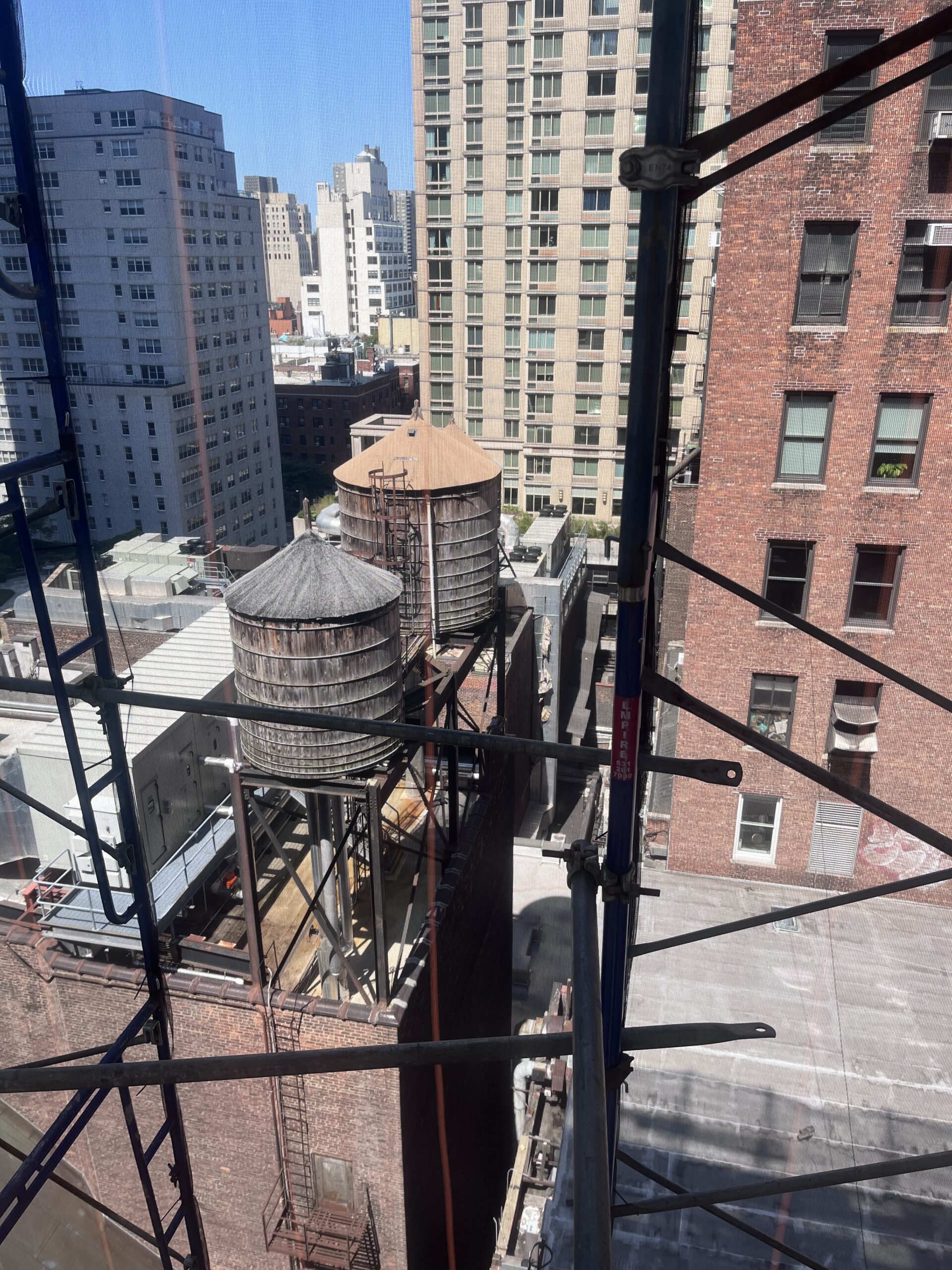
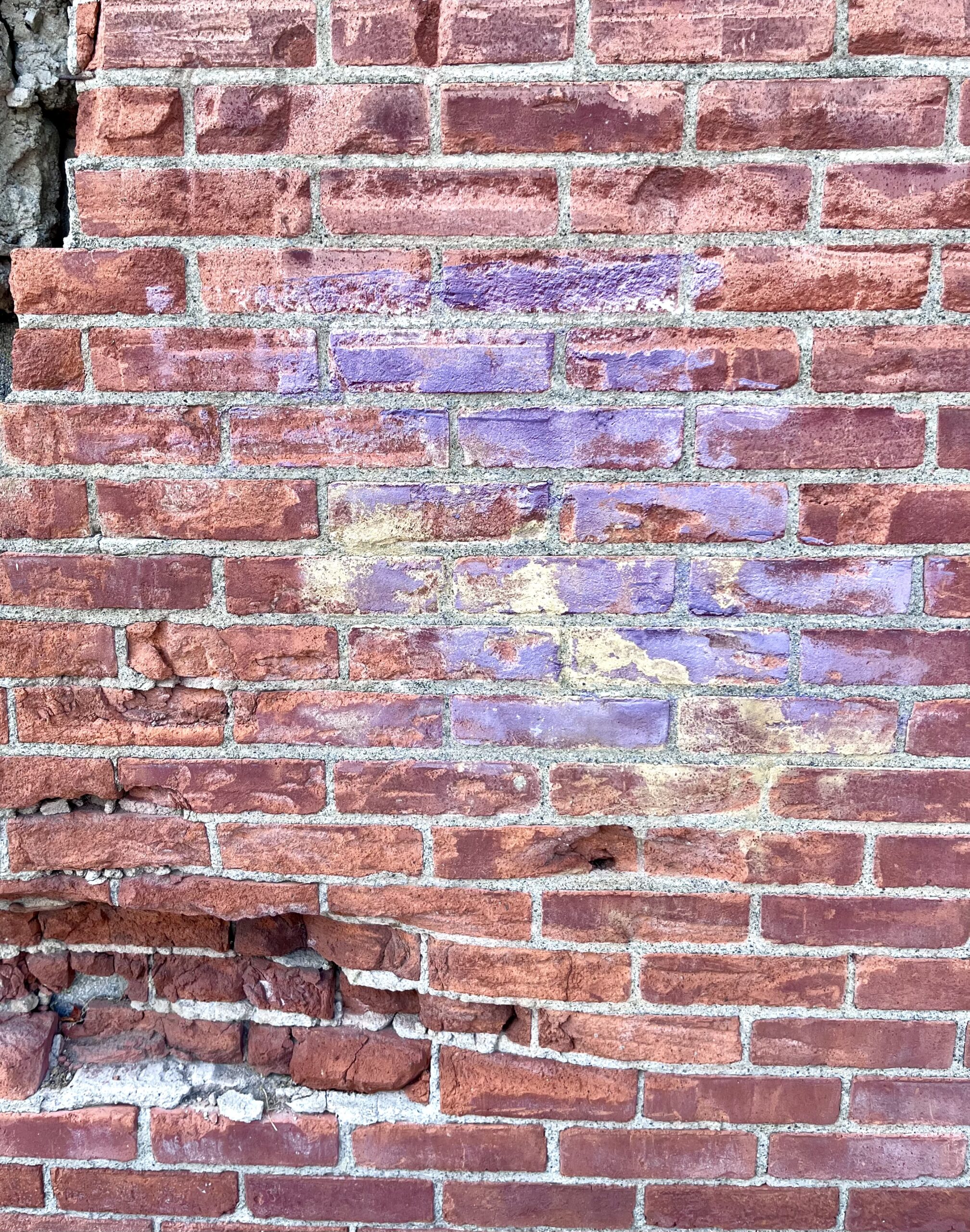
Surely, just as Hamlet is predisposed to see murder behind his father’s death, so too we are predisposed to see E.T. on the surface of Mars and Christ in the patterns of rust on a water tower. These are the mirrors of our existence. Is it possible to get behind them? Let us see.
II.

Authentic
Etymology: Middle English autentik, from Middle French autentique, from Late Latin authenticus, from Greek authentikos
1 : obsolete : AUTHORITATIVE
2 : worthy of acceptance or belief as conforming to or based on fact, e.g., paints an authentic picture of our society b : conforming to an original so as to reproduce essential features, e.g., an authentic reproduction of a colonial farmhouse c : made or done the same way as an original, e.g., authentic Mexican fare
3 : not false or imitation : REAL, ACTUAL, e.g., an authentic cockney accent
4 : true to one’s own personality, spirit, or character
On a canvas is painted a smoker’s pipe. The kind from which one sucks in the rich smell of burning tobacco. The background is a flat tan. The cup of the pipe is a polished brown. The black handle curves up and flattens to the right. Written in a black cursive script below the image are the words: “Ceci n’est pas une pipe.” This is not a pipe.
Let us continue.
This is not a pipe. Nor is it the observation of a child for whom words are as simple as blinking, as taken for granted as the contractions of a pupil. “What is this?” It is a pipe. “No, this is not a pipe.” The child looks at you, trying to ascertain whether “This is a joke.” Perhaps, but it isn’t a pipe. Nor is it the observation of a teenager cursed with inchoate articulation – a tongue stiffened as if by ice and words weighing more than the reality in which they are embedded. “What is this?” It is, …it’s a, like… “This is not a pipe.” Well duh.
But if this is not a pipe then what exactly is it? That’s easy. It is a painting of a pipe. We say this triumphantly, as one who has seen through a trick question. One in the know. Except that answer isn’t quite correct, or so we have rather smugly been informed. Actually, it is only blotches of colored paint spread on a canvas, or patterns of reflected light hitting the back of a retina, or neurons firing in a particular pattern, or genes growing the neurons into the pattern that will be activated in a particular way such that the word “pipe” will be emitted. Others, of course, prefer that we be corrected in the opposite direction. The pipe, you see, is obviously a phallus and a hostile one at that! Did you know that Magritte’s mother committed suicide? Did you know that the society in which he was raised was patriarchal and colonialist? Did you know that this “painting” is actually an item of consumption? Indeed, this is certainly not a pipe. It is a conjunction of historical vectors. Just as children play the game “last one there is a rotten egg,” whoever is stuck with the pipe loses. Meanwhile, the rest of us can be assured of our superior honesty, superior clarity, superior authenticity, and assuming that authenticity is a virtue, our superior virtue. Isn’t that right?
***

“Cafe Pierre” by malias is licensed under CC BY 2.0 .
A Café – Afternoon. If Martha Stewart could set up her own café, this would be it. The interior design is like a brochure that reads “European but with a rustic American undertone.” Wooden blinds that have been roughly sanded hang from one brick wall. A watering can and a pair of garden gloves hang from another. The tables are small, and the conversations intermingle with the smell of coffee.
Person 1: Let me see. Oh my God! I can’t believe you’ve still got that! You know I used to believe that I looked like Farah Fawcette.
Person 2: Really?
Person 1: Just like I used to believe in romantic love.
Person 2: Ha! You got me.
Person 1: God, we were so sincere.
Person 2: It just kills me…
Person 3: What do you mean?
Person 4: I mean, it’s like, I don’t know. I guess we’ve just grown apart. My therapist says that we haven’t come to terms with how our own parents repressed us. And we were practically still teenagers when we got married.
Person 3: But you seemed happy.
Person 4: Oh, don’t get me wrong. I was happy. I’ve got the wedding pictures to prove it. But I guess it wasn’t a real happiness. How can you give yourself to someone when you don’t know who you really are? Now, it’s like we’ve become weights that we can’t escape. Tired. Boring. Dishonest. It’s impossible to live, trapped like this…
Person 5: But the best part was seeing the real Nepal.
Person 6: Really?
Person 5: Yeah. The company that like puts these tours together has been doing it since before Nepal became, you know, trendy. I found about them through a friend at business school. We were only in Katmandu with all the tourists for the first and last nights. The rest of the time we were like really out among the real Nepalese. Yeah that’s a good one. That’s me on the Annapurna trail.
Person 6: Thanks for the shirt by the way.
Person 5: Hey buddy, no problem. Just my bit to help world trade. The family that I got it from were the nicest people you can imagine. Real, you know. The children had these huge dark eyes. Look, I got a picture of them here. Simple folk. We’d taken the escort vehicles that day. And then, there on top of the world was like this town. Incredible. God, it was a great trip. Spiritual, you know?
***

“Hostess twinkies tweaked” by Modified version of Hostess_twinkies.jpg: Larry D. Moore *derivative work: Ubcule (talk) is licensed under CC BY 4.0 .
But talk is cheap. Especially when it is the same tired cliches over and over again, and anyway a picture is worth a thousand words. So quick, let’s get back to that pipe. Actually, what you have before you is not a pipe. We have segued from Magritte to Warhol, and let us suppose that we have before us a mass produced food item – a Hostess twinkie (or a Coca cola, or a can of soup).
As much as an airplane, a twinkie is the culmination of hundreds of years of technology. It is a cake-like snack food item with a pale yellow color. It is oblong and rests on a thin cardboard plate. It is wrapped in cellophane, and looks vaguely as though it might have been baked, although rumor has it that this is a clever illusion instilled by the production process. The interior of a twinkie is filled with a white, sweet, creamy substance. You can eat the whole thing in three bites that leave a waxy after-film in your mouth. Best wash that down with a soda. The question we must ask concerning the twinkie, though, is what is it?
It is a twinkie.
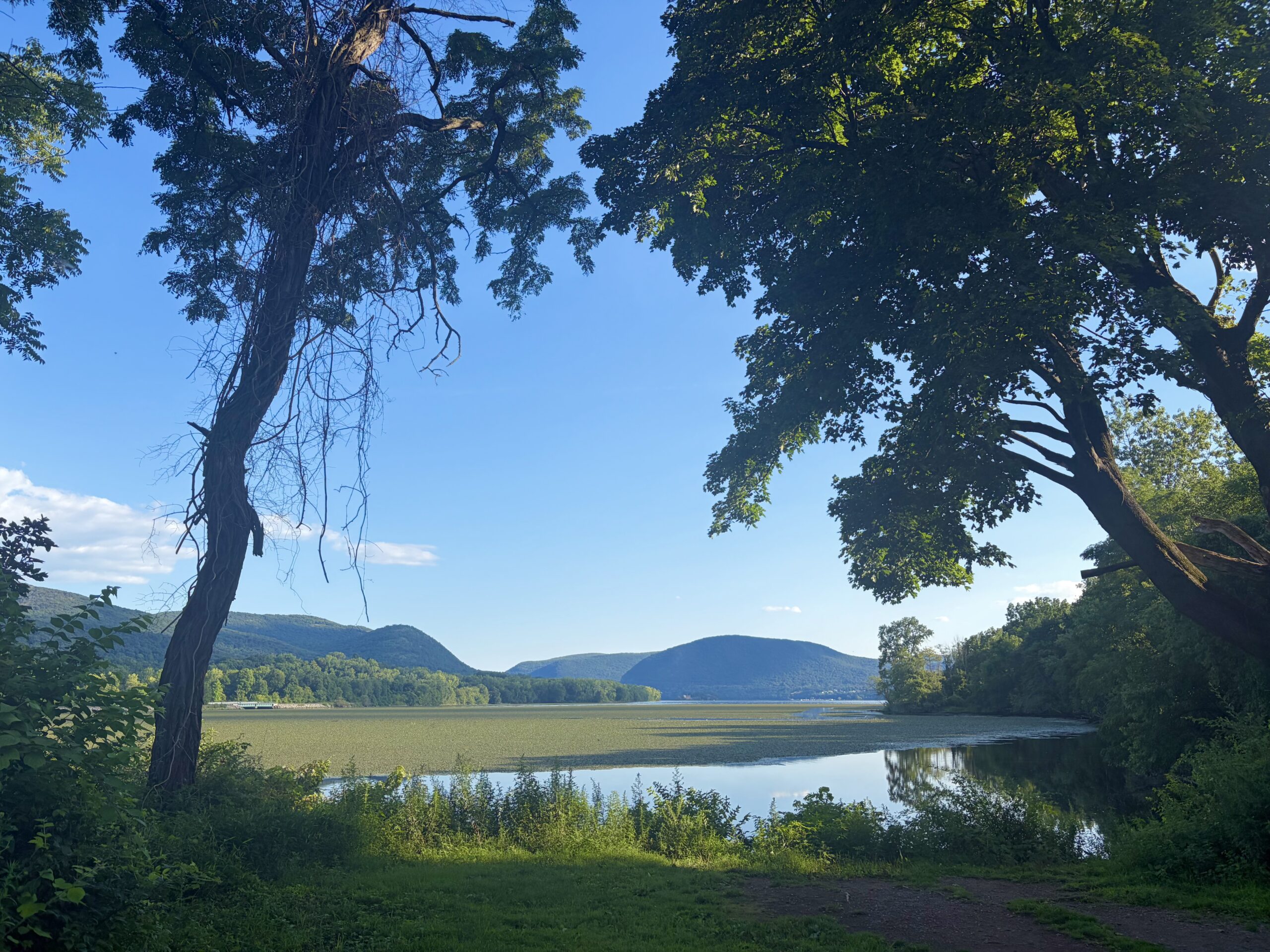
Of course it is. It is not a schwarzwälder kuchen. It is not a mousse au chocolat. It is not a pipe, nor does it pretend to be. It is in this sense that a Hostess twinkie is as honest as, say, the Sistine Chapel, or an oil stain soaking into the concrete of a rest stop, or a view of mountains across a lake. Each of these is equally artificial which is to say that each of these is equally honest. The Sistine chapel is the output of belief as much as a landfill is. The Sistine chapel is as much for consumption as is a twinkie. Isn’t that ultimately what the painting of a pipe alludes to? This is not a pipe. That is an illusion which all clever people should, if not dispense with, then certainly question. The goal is honesty above all else. Facts. Data. Measurements. Everything else is at best baroque, and at worst dishonest. Indeed, one might reasonably claim that there exists an honesty anxiety. There’s something new to add to the Freudian cornucopia. If I’m not being honest, if I’m not being authentic, then I must be failing at this thing called life.
***

“Phone” by Julian Carvajal is licensed under CC BY 2.0 .
The phone rings. Imagine this. You are in your living room, or lying on your bed, or watching television. Your phone rings.
Hello?
Have you ever seen a child learning to talk on the telephone? You see them nod. You see them shake their heads. A grandparent is feeding them questions, and then finally asks to the heavy breathing, Are you still there? And you have just picked up the receiver and placed it against your ear (How many times does this make since you were that child?).
Later, you will recall the sound of traffic outside your window. You will recall the sad, desperate annoyance of the television – a commercial for a new cleanser. You will recall the texture of the floor, how it needed to be swept.
But “recall,” of course, isn’t the right word. It implies something voluntary and under control, but you (the you who you will become), you won’t be able to escape the details – the sound of the traffic outside, the commercial speaking from another room, the texture of the floor – because you, after all, are still here, and she or he, your husband or wife, your child, your parent, your friend is not.
You say, “Tell me what you can see.” You say, “Can you get up?” You say, “Try the door.” Each of these in their own way a hypothesis, a story, a piece of hope burnt as an offering.
You could flee. You could say, “Look I am going to call someone to help.” They would accept this. You take charge. You hang up. You take a deep breath, pick up the phone and begin dialing. Perhaps you even enjoy this– setting things in motion, having an impact, accepting (strongly) the inevitable sympathy. Finally, with a sense of triumph, your fingers quickly press the familiar number. And it rings, and rings, like a lost echo.
Well, you did your best, didn’t you. There was nothing you could really do, was there? Honestly, how could you be prepared for something like that? It was a tragedy. It was an accident, so pull yourself together. Move on. That is what they would want. But that misses the point, does it not? “They” after all are not here, and the only “it” that remains is your own response given the voice, the texture of the floor, the receiver that was pressed against your ear. These are no accident. They are a gift, the authentic detritus of living, and nothing more than deserved.
***

Is honesty, then, really enough? If it is, how do we explain what it leaves behind? We do not choose this place in which we have been born or the responsibilities which have been placed upon us (even if those responsibilities are to ourselves, alone). These are facts that no amount of honesty can absolve us from or disassemble for us. “I have that with in which passes show,” says Hamlet. What the pipe is, is to me alone, he might add. “I have that within which passes show,” he says in response to the honest and sincere questions of his mother, and it takes the duration of the play for us and for Hamlet to learn what that is.
In the final act a group of mourners are gathered around the grave of a young girl whose name was Ophelia. Hamlet observes them. They are his people. They are his birth and his death, and thus recognized he strides forward to meet them. The mourners turn. Who dares infringe upon this moment? What is this new threat? “This is I, Hamlet the Dane.”
This is no pipe. This is no conjunction of historical vectors. It is no pattern of nerve cells, nor even a pattern of genes. It is a story. It is a leap of faith. It is a choice, but into the all-too mortal. It is an achieved fiction fought for and finally won. It is, indeed, a paradox: honesty providing a clarity that leads us back to fiction, back to the imperatives of authenticity.
This essay originally appeared in a now defunct literary zine that I created in the early 2000’s, The Tesserae Review. Given that “authenticity” is in the current political zeitgeist, I decided to re-post it here. The piece has been tweaked and updated a bit since the original.

Track 1: Overture
Memory. That was the topic of Tuesday’s and Thursday’s lecture. Consolidation. Storage. Retrieval. State dependency and spreading activation. Hippocampal tuning and the transition (or lack thereof) of traumatic memories from the immediacy of a first-person perspective to the more distanced handing-over into possibility. The ship on the horizon. The train pulling away from the platform. Or Gerard Manley Hopkins’ windhover riding the currents “rung upon the rein of a wimpling wing,” circling out and away through the mountain valley.
At the end of the second lecture, I showed a painting by Matisse – Studio à Collioure. I had never done this before for past classes, and I wanted to try something that would convey the forms of our memories – their alignments and relations – the fecund and personal. Alive but also strange, with a sort of creatured beauty. Plants, buildings, living objects. Purples, reds, yellows. This is what our individual lives have uniquely selected for our interior landscapes. Sure, in class we say that memory is the process of consolidation – a brain’s circuitry tuned by the potentiation of neurons. Post-synaptic potentials dialed up and down in a white noise of static. But this static is ships and balloons and the rooms in which we actually breathe – the pyered offerings we place on the flames of living. The smoke sent out like a prayer or pleading into the grinding maw of entropy — the transformation of absence into “consolidation,” “storage,” and “retrieval.” Because what is the alternative? Absence unnoticed and fallen away?

***
Track 2
It was a Wednesday morning when I learned of my brother Rance’s death. I was talking on the telephone with my oldest daughter. She is a “morning person,” and so when she and I speak on the phone it is often in the morning with me drinking coffee while ironing clothes in my living room and her walking her dog along the sidewalks and parks of D.C. While we were talking, my home phone rang and announced a call from my parents. I told this to my daughter, and let her know that I was going to let it go to the answering machine (I still have one of these). But the overheard tone of my father’s voice was broken. I told my daughter that it sounded like something bad had happened and that I needed to call “grandpa.” On her side, my daughter said that she had just missed a call from her cousin, and so we both steeled ourselves and said goodbye.
Only just the previous day, Rance had texted my other two brothers and me a series of long texts about my parents. The previous week he had gone to stay with them. There had been an emergency. My dad had gotten Covid and while quarantining; my mother had developed heart issues that required an ambulance to the local hospital. There had been a flurry of communication between my brothers and me, and it had been Rance who stepped up to fly down and take care of them. He had a coinciding spring break. So, the pieces fit.
After Rance returned from taking care of my parents, he himself came down with Covid. He texted by brothers and me about how he’d left things – how he’d spoken with my dad about maybe paying for someone to start checking in on them. While he was with my folks, Rance and I exchanged some texts. He told me about how shaken our parents had been when he had arrived, but by the end he was telling me about how he’d gotten a half dozen cupcakes for them from a place downtown. That would be the last direct communication between my oldest brother and me — a text about how our mom, despite all of her health issues, still held on to a very strong sweet tooth. This was the kind of thing that he and I both enjoyed sharing. The quirks and oddities that made people wonderfully, uniquely who they are.

Now though, the text chain between Rance and me is buried under more and more layers of other texts. The sediment of living over the frozen past. At first, periodically, I would send him a text just to bring the text chain back up to the top. Simple things. Letting him know that I still missed him. Letting him know some piece of information about his wife and children. I knew that I risked forgetting to reach out to him, and that at some point the text chain was going to sink away for good. Maybe slowly, bit by bit into the strata of… of what, I wasn’t sure. Or maybe in updating a phone or computer, it would suddenly become lost.
Sure enough, two months after his death, a text that I sent out displayed a red exclamation and a red-fonted “Not Delivered,” And then, soon after, a message appeared on my phone telling me that I had been blocked from “originating” messages to my brother. I rationally knew that this was not deeply meaningful or symbolic – that it was just a phone number that had now been passed along to someone else with their own concerns and friends and family. Still, it felt like more than that.
I do still have the voice recording that my father left on my answering machine that morning when he called to announce my brother’s death, even though now, 28 months and counting have passed. It isn’t masochism. I don’t press the button to listen and re-experience the pain. I don’t want to relive the moment or revel in some sort of self-punishment. It is more a superstitious belief. That maybe, if I keep the recording, there will be a way back. Like chalk marks in the maze, or shore lights lit for the night boats out at sea, or the porch light left on for the dog that has run off. Here. We are still here. Come home.

***
Track 3
The morning that I learnt of my brother’s death, all I could think of was how afraid he must have been. His wife had gone out for a morning exercise class. His daughter was asleep in her bedroom. And there, that morning alone in a kitchen, he died.
The morning that I learned of Rance’s death, I texted my younger daughter who was on a spring break trip of her own in Portugal. I texted three close friends. I texted my two other brothers – one older and one younger. I texted my girlfriend, and then I went to teach my psychology class.
Later that night, I ended up at a pub that is within walking distance from my house. It’s where I would go to write a couple-a-times per week back then, and what I remember from that Wednesday night – what I remember is an overwhelming belief that if I could just manage to string together the right words, they would be a rope that Rance could grab ahold of and pull himself back. I knew that it was urgent – that with each second the depth was deeper and the chasm greater. So, I wrote, and I wrote, and I wrote, and I wrote… But it didn’t work. The words were not enough. Rance did not appear at the table to laugh or to express incredulity in his own way. When I walked home that evening he wasn’t there, and the next morning when I checked my phone’s location app, I saw the icons of his two sons moving along train tracks on their way from NYC and Philadelphia to Washington, D.C. The magnetic fields of love and grief. They were heading home to be with their mom and sister, these two moving icons “CC” and “MC” on my phone’s screen.

***
Track 4
My brother Rance was the oldest of us, my brothers and me. It is one of those things that doesn’t matter, but of course, it does. One of my best friends is the oldest of three brothers, and his own father nearly died of a heart attack at a young age. As he was being spirited to the hospital the father had told my friend, a young boy at that time, that it was up to him to take care of the family. My heart aches to think of that young boy having his childhood taken away like that. And after my brother’s death, when I first spoke with my other older brother – he who had shared a room with Rance for the duration of their childhood and teen years – when I first spoke with him after Rance’s death, he at first sounded out a brave face. “This happens.” “I’m thankful that we saw each other over Thanksgiving.” It was when I asked him, “I don’t know if this matters, and I want you to know just how important you are to me not matter what, but have you thought at all about how you are now the oldest of us brothers?” I asked it something like that because I know my brother, and I suspected there couldn’t help but be this weight, and when I did ask this question, that was when he broke into tears over the phone.
There is something about being the eldest sibling. There just is, and it is not asked for that weight of poured-in hopes and anxieties. I will say, though, that there is also something about being the kid brother and looking up to, and watching, and taking for granted our older brothers. That is what I heard over the phone with my now-oldest brother. My cool, tough, motorcycle-riding brother – in some ways about as different from Rance as a brother could be, and yet he too had been Rance’s kid-brother.

***
All the flowers in the Cordilleras appear to be Autumnal flowers,—they were all in blow & seed—many of them very pretty.— I gathered them as I rode along on the hill sides: if they will but choose to come up I have no doubt many would be great rarities.— In the Mendoza Bag, there are the seeds or berrys of what appears to be a small Potatoe plant with a whitish flower. They grow many leagues from where any habitation could ever have existed, owing to absence of water… With the Specimens, there is a bundle of old Papers & Note Books. Will you take care of them, in case I should loose my notes, these might be useful.— I do not send home any insects, because they must be troublesome to you & now so little more of the Voyage remains unfinished I can well take charge of them.
Letter from Charles Darwin to J.S. Henslow (18 April 1835). From The Darwin Correspondence Project: The Beagle Letters. University of Cambridge.
“What was it like, out there in the Atlantic Ocean?” inquired Mr. Little, who had never been very far from home.
So Stuart and Margalo told all about the ocean, and the gray waves curling with white crests, and the gulls in the sky, and the channel buoys and the ships and the tugs and the wind making a sound in your ears. Mr. Little sighed and said some day he hoped to get away from business long enough to see all those fine things.
Stuart Little (Chapter 9)

Track 5
All parents are familiar with their growing children off on expedition. Playdates, overnight visits with the grandparents, camps, college, and grand voyages to other states and countries. They read the quick observations of a postcard. Maybe they are texted a photo here and there. Maybe in picking up a room they come across artifacts: a leather bracelet, a patterned handkerchief, a smooth stone. Evidence of adventured living elsewhere and brought home. Having two daughters who are gathering up their own lives, I’m familiar with this experience. As parents we note. We encourage. We inquire. But ultimately it is a diverging and a separation that comes with no small amount of pride.
Being a kid brother is also defined by this emotion. We are those left at home when others have gone off on their expeditions. Our older brothers ship home the crates that arrive at the docks, pried open to reveal oddities packed in straw. Hand-written labels on envelopes of seeds. Cases of rocks. A bottled lizard. It is left to the imagination to fill in the pieces – the whys of the selection as well as the pride of knowing that one’s brother brought these things home. The difference, though, is that a kid brother doesn’t visit the museum. A kid brother lives in the museum. The museum is his home.
When we were kids, although he was 5 years older than me, Rance was like a playmate. There was tackle nerf basketball, played from our knees. There was the high jump pit set up in the living room with bean bags as the landing pit. Once when we were racing bikes down a sidewalk in Florida, with Rance well ahead, a pickup truck pulled out from a drive, hit Rance’s bike broadside, and sent him airborne. Once when we were in our 20s and 30s there was city league basketball that we played with a team of misfits. For years afterward we would laugh about our teammates who would panic and hoist up shots from half court. We had an on-going joke about one of our dogs who hadn’t really passed away, but had instead gone off to California to be a movie star, and another on-going joke about one of his dogs who we pretended could talk and claimed not to be dog so much as an overly refined human.
But there were also the off-stage observations. Trying to make sense of his sobs in the back seat of the car as we drove away, after dropping off my other older brother at the University of Wisconsin. Or overhearing my parents discussing bullying and shoes thrown from the windows of a school bus. Or watching as he fell in love, married and created a marriage with his wife. Once, during a baseball game that Rance was playing in, an adult in the stands spat out disgust when Rance missed the fly ball that had been hit deep into the outfield. But then Rance picked up that ball and threw a perfect pitch all the way to home that picked off the runner and shut up that piece of shit adult who had nothing better to do than curse out judgement at young boys who were playing a stupid game. Yes, and the indignation I felt then as a young boy is as intense now as it was then. How does it feel now, you stupid jerk, that the target of your scorn went on to get a full college scholarship, a PhD, to start a company, help raise kids that loved him, participate in an enriching marriage? How does it feel now? Being a kid brother is experiencing that protective resentment, even now, multiple decades later.

***
Track 6
Being a kid brother is having a troubled friend nick-named Spidey. It was over the Christmas holidays and Spidey had called my parents’ house while I was out. Rance was there to take the call, and Spidey said that his dad was going crazy. When I got back from whereever I happened to be, Rance told me that we needed to go pick up my friend. He drove with me in the passenger seat, and he walked up to Spidey’s door with me. I can remember pulling up to Spidey’s house. It was like the fourth one that he’d been in over the preceeding years. Each one in a lower socio-economic neighborhood. Spidey’s dad wasn’t there, and he was very coy about what had been going on, but Rance told him to get in the car, come up for the night, and we’d sort things out the next day.
***
Track 7
Being a kid brother is not knowing who to call, but needing to speak to someone. Once, when I called Rance, it was during a night walk. The dusk-moon rising. I was walking up a gravel road that ascends a hill to the campus observatory. My mind was like a gathering of crows in a tree, and then the settling silence that was a decision to call my older brother. Voice broken and tall grass along the periphery sliding past, I left a message that had something to do with an urgency to figure this “love thing” out.” I am sure that it was melodramatic gibberish, and as soon as I had hung up, I vaguely hoped that Rance wouldn’t call back. But he did, or rather, he texted that he as out at dinner, and told me he would call me the next day and that it would be ok.

***
Track 8
Being a kid brother is pulling my car up to the curb outside his house after a 10-hour drive, and the porch light is on over the front door. When my daughters were younger, they would tiredly pile out of the car. I shamble up its steps, knocking quietly so as not to wake up his wife, hoping that the dogs don’t erupt in a scrabble of barking. And there is my brother in sweatshirt and pajama bottoms, lifting himself up from a living room chair. Maye he is watching television. Maybe his kids are there in the living room with him.
“Heeeeey, big man.”
For a while Rance was cycling through the show Law and Order. If sports were happening, it would be sports. If certain cooking shows were on, that would be playing. He would ask me if I needed water, and we’d sit and chat. Night-time weary – long drives and end-of-days, but also secluded and intimate in the way that nights can be when the rest of the world is asleep. Dogs jumping up to put heads on laps. The television on. We would talk about the drive. About our parents. About academia. About “my pigeons.” About our children. About his wife. Catching up. When it was soon after my divorce, it would circle to my ex-wife and maybe her folks. Usually, we’d get to a point where he would mischievously ask me if I wanted some scotch.
I can see him in a chair with his feet propped up on a foot rest, dogs around him, rounded belly, head back. We had a way of talking with each other while watching the television. It was like two things running in parallel, briefly sharing the same track, and then diverging. Eventually, though, it would be late, and if I had traveled alone, he would tell me that I was upstairs (in his oldest son’s room) or down (in the spare bedroom), and I would lug my bag and backpack into this shared other space and close the door.
There is something particular about being in someone else’s bed, turning off someone else’s light, and in the sleep-descending dark, sharing space with another’s presence – the arrangement of furniture, the feel of carpet underfoot, the posters up on the wall, the contours of the mattress, the position of the closet door stocked with hanging clothes. When you are a kid going to your first sleep over, it is unsettling, and then, with time, it ceases to register. But when it is your brother’s house – this place of memory now that he is gone – there is a sense of privilege and a sense of, not exactly comfort, but protective solidarity.

***
Track 9
But more than anything, being a kid brother is going into rooms that we’ve been told we are not allowed to enter, touching things that we’ve been told not to touch. The collection of beer cans. The collection of science fiction paper backs. But especially the stereo and the records. One of the great mysteries I experienced as a kid brother was the records that my older brothers brought back from college. Here was the evidence of greater world out there. This was proof of what it meant to be older and on expedition. Girls and cars and midnight movies and independence. Vinyl records, album covers and liner notes. Music heard on the other side of their bedroom door.
When I graduated from high school, my two older brothers gave me a Sony Walkman as a graduation present. They had saved up the money for this themselves, and along with the gifted Walkman each of them had made me a mixed tape. When I went off to college I took the Walkman with me, and as I tried to find my way in college I would click in place those tapes and settle the foam speakers over my ears. Late at night I would restlessly walk the emptied campus streets wrapped in songs sent by friends and the songs of my brothers. My own records would be converted to cassettes, chopped up and ordered in ways meant to convey an internal meaning. And that is what I have done here. Here is a mixed tape for my brother Rance along with liner notes to go with each song.

Jonathan Richman and the Modern Lovers: Roadrunner
What’s especially special about this song is that it was the first song on a tape that Rance made for me. It went along with the Sony Walkman graduation gift as if to say, “Now you get to join us on the journey to adulthood.” This song is driving with a favorite song blasting on the radio. There’s a sense of being alone, but also loving it as the landscapes go by. Night time. I’ve got so many memories of driving in a car with brothers, family and friends and the radio (tape cassette, CD, music app,…) cranking out a song that gels the shared experience.
Marshall Crenshaw: Someday, Someway
On the other side of that cassette Rance gave me was Marshall Crenshaw’s greatest hits. I’d never heard of Marshall Crenshaw, and never heard his music. What to make of it? His voice was so smooth and bouncy, and so different from the melancholic Pink Floyd that I was drawn to. It was like Rance was saying, “Look. C’mon. there are other possibilities. College life can actually be fun.” When I’d walk the streets of Providence, RI at 2:00 in the morning Marshall Crenshaw’s rock-a-billy callback would walk with me. And in so doing my brother Rance would be there, too, walking along with me.
New Order: Your Silent Face
Tape cassettes weren’t the only way of sharing music. Vinyl had its place, too. When I was in college, for one of my birthdays, Rance gifted me two records by New Order. He was in graduate school at this time. Once again, this was music that I had never encountered. One of the great things about vinyl was the album cover art, and one of the records had a painted photograph of a bouquet of flowers for its album cover. I love bouquets of flowers. Simple, colorful, in a vase on a table and shadows moving across a room as a day goes by. That’s what this song makes me think of.
The B-52’s: 52 Girls
I’m repeating myself, but older siblings returning from college were like ambassadors of possibility. The B 52’s would break out into the mainstream, but when I first heard them coming out of Rance’s room, well I was 12 or 13, and this song was all the glorious hyperactivity of shackles thrown off.
Sex Pistols: God Save the Queen
And speaking of shackles thrown off – let’s open the specimen trunks sent home and brush off the Sex Pistols. I can still remember how Rance would snarl out, “We mean it, man!” as this song was playing. Mind blown. Here was a music that was nothing but drive and snarl. Really? This was allowed? Heck yeah, and it’s awesome.
Rocky Horror Picture Show: Sweet Transvestite
But there was always the sense that the Sex Pistols and B 52’s and New Order were really just about having fun. Taking the piss out of the universe and groovin’ while doing it. Rance brought home the Rocky Horror soundtrack probably 10 years before I ever saw the movie. There were no visuals to go with the saxophones or “come up to the lab and see what’s on the slab.” It was just music. Weird, catchy, fun, and completely beyond southern bible belt comprehension.
The Cars: Just What I Needed
If there is one group that I associate with being a kid brother hanging around outside of my brother’s closed-door room, it is the Cars. Rance came back from college after his freshman year, and it was the Cars that I heard playing on the other side of his bedroom door. He shared a room with my older brother. I remember going in (probably uninvited) and lying on the floor next to the stereo speakers while this song played. There were record covers to illegally examine, and I remember how Rance told me that he’d seen the Cars live, and they weren’t that great. I can see that. Rance liked more energy in his live shows. Give him the Ramones over the Cars any day. But no one can argue that the first two Cars albums were riding on a wave of something new.
Snail Mail: Heat Wave
Two years before Rance died he and I went down to Chattanooga to help our parents move houses. My parents were downsizing and moving from the house they’d been in for 50 years – moving off the mountain into a smaller house closer to downtown. Rance and I stayed in a hotel, and driving back and forth we’d share different things. On the radio he was playing new music that he was into, and one of the bands was Snail Mail.
Alvvays: Ones Who Love You
The other bands was Alvvays. I have no idea where or how he came across this music. Me, I’m dependent on two college radio stations that I follow (WUTC and WVKR). But this song and Heat Wave by Snail Mail were two songs that we listened as we drove over the Market Street bridge and through the downtown gridded streets of Chattanooga, TN. Our parents’ house slowly emptying its memories, items packaged and floors swept, leaving behind a haunted architectural space.
Eddy Current Suppression Ring: I Admit My Faults
The last time that Rance and I talked music was the Thanksgiving before he died. He and his family hosted Thanksgiving that year in Arlington, VA, and I had driven down from Poughkeepsie. My oldest daughter lives in D.C. and my younger daughter flew in from San Francisco which was a fun secret and a surprise for me. My younger brother and family had come in from New Hampshire, and my other older brother and family had flown in from Chicago. My parents had come up from Chattanooga. There was lots of gathering in the kitchen. Lots of gathering in the living room (where sports played on the television). A table covered in puzzle pieces, and board games to play. Once while Rance busied himself prepping food, and I also busied myself prepping food, we swapped music that we were listening to. Eddy Current Suppression Ring was a band that I “had to check out.”
Khruangbin: Hold Me Up
Another band was Khruangbin. “I know them!” I said as I pinched out dough for squash rolls. Grooooovy and slick like summer rain. I told Rance that he had to watch a live performance that Khruangbin had given at the Best Kept Secret music festival. This is one of my last visual memories of Rance. Him bending over a cutting board, me next to him rolling balls of dough in the palm of my hand, and sharing music we were currently in to.
***

Beastie Boys: Stand Together
“What am I listening to? Right now, I’m totally obsessed with the Beastie Boys.” That’s what I told Rance that Thanksgiving, and this is where the playlist moves from memory to offering. I was in running shape when Rance died (I’m not now), and whenever I went running I listened to the Beastie Boys. There was a gravel road that I would often run along, and that’s where it would repeatedly hit me that he was gone. It would make me angry. It would make me sad. But more than anything the memory would fill me with an intense sense of urgency. And while I had these thoughts, the Beastie Boys would be playing.
Makthaverskan: These Walls
Sometimes I hear music that I just know Rance would like. Makthaverskan is one of those groups. Swedish new wave with a debt to New Order. You heard that right, this is a Swedish pop, punk band. And they are awesome. Take the Go-Gos from the 1980s, add a hyperactive drummer, stuff it all into the tank of your car, and hit the open road. By the way, there is a hilarious mismatch between their music and the live clips that exist on the internet. Their stage presence is like a high school club – hands in pockets and a bit embarrassed.
Westkust: Weekends
More Swedish rock? Yep, more Swedish rock. Listen to those drums.
LCD Sound System: North American Scum
I came to LCD Sound System the way that I come to a lot of my new music: I heard them on a college radio station while driving. I can’t say that I’m so into overly self-aware electronica. But this song is awesome. If Rance were here I would dare him to not to nod his head while listening to this song. Yeah, it’s got those Lou Reed vibes, but grooved up for the 21st century. My favorite line? “New York’s the greatest if you get someone to pay the rent – Wahoo, North America!” It’s the wahoo. Love it.
Straight Arrows: Middleman
Anthem of kid brothers everywhere! This is Rance and me in the car driving around to pick up some of the other Tuff Boyz teammates, our Durham city-league basketball team. Play the video tape at triple speed. The neighborhood drive. The players pouring out of the car. Shot after shot clunking off of the rim. Pass after pass hitting players in the back or bouncing off of shoes. The other team dunking and dunking and dunking. Let’s go middle man!
DIIV: Under the Sun
If Rance had a weakness for punk, I’ve got a weakness for trippy rock. Back when I was a kid, taking piano lessons, Rance used to affectionately say, “You’re Rick Wakeman,” and then pretend inhale a joint. I didn’t know anything about that, but I liked the attention from my older brother! This is another song that I first heard on a college radio station: WUTC out of Chattanooga. It reminds me of another band that I like more, Yeti Lane. But this is a solid road trip song. Roll down the windows. Look out at fields of Kansas sun flowers rolling by.
Echo and the Bunnymen: Promise
This song is an extended wale. Is it angry? Despair? Probably both. Me as a younger kid brother asking why you left. Why’d you grow up? Why’d you leave? Why’d you die? It’s not rational, but music doesn’t have to be rational. Echo and the Bunnymen was one of those bands that were almost brilliant. Not sure what kept them back, because Promise is great.
Wolf Alice: The Last Man on Earth
Rance’s mind was a mind that craved and absorbed data. I can’t help but wonder if in the years leading up to his death whether the world, in a sense, stopped providing him with meaningful data. Did he feel seen? I can’t help but think that I didn’t do enough. That I didn’t sufficiently… that I wasn’t there somehow. That I didn’t interrogate something. That I didn’t let him know that he wasn’t superfluous. That he was needed and necessary and that there was so much more that needed doing.
Phoebe Bridgers: Smoke Signals
Night walks. There was a pub that I would head over to write. A Cheers kind of place where you can be known and anonymous at the same time. There was the elderly woman who would sit with her drink, counting and recounting bills. There was the solitary bearded man who wore a big cowboy hat. He’d sip a single beer at the bar. Me, I was the guy sitting in the corner at a table, scribbling away at pads of paper. It’s where this piece of writing first started, actually. It’s where I went the night that you died, thinking that I could somehow write us out of that dream. This song was one that was playing as I walked the cold night streets back home. I liked the image of smoke signals being sent out as an offering, as communication sent from an unseen person off in the distance. It’s what these songs are – trash burned on the washed-up beach of living.
The Cure: I Can Never Say Goodbye
I hate in a way to end this mixed tape with heartbreak. On the other hand, you’ll be amused to hear that I didn’t even hear the lyrics of this song until I had listened to it 10 or more times. I normally don’t hear lyrics. It’s like face blindness. Songs are a gestalt of instruments for me. Anyway, it was just last summer, and I had committed myself to going up for full professor. There was a one-month push at the end in which I was trying to get out one more paper, trying to put together a teaching statement and portfolio, trying to put together a personal statement that felt authentic. It was multiple weeks of working until two or three in the morning, and during that time I had the Cure on an endless loop. Also, whether I wanted to or not, somehow the idea of going up for full professor had become entangled in the idea of filling your shoes. You who had been a full professor. The successful head of a research group. And then there was me, the happy-to-go-along. So, I was going to try and feel urgency for once. I was going to try and step up and fill some sort of void. …as if that were going to be possible. But as we know, these things aren’t rational. The story coalesces and the magnetic fields of our emotions align the compass. Apparently, this song is written about the death of Robert Smith’s own brother, and when I did finally hear the lyrics they brought me up short:
From out the cruel and treacherous night
Something wicked this way comes
To steal away my brother’s life
Something wicked this way comes
I can never say goodbye
I’m not going to lie, when I did finally learn that I was going to be promoted to full, it was a complicated feeling. It wasn’t me that deserved it, after all. It was you. “Come on now,” I hear you say. “That’s survivor’s guilt.” I know. You’re right.
***

Track 10
A week after Rance’s funeral, I sat down and wrote him a letter. It went like this.
Dear Rance,
It is just over a week since the service that was held in your honor. It was a hot, sunny D.C. day, and before the service we gathered – the immediate family – with the minister in an antechamber. There was choking back tears, and hugs, and attempts to stay upbeat, to stay “pulled together. You would have done the same, and surrounded by this familial love – because it was as simple as that – a cluster of people in a church antechamber, a pitcher of cold water beside a bouquet of flowers on a central table. You would have appreciated the simple calling that brought us together just as once you stood up to give remarks at our grandfather’s funeral. You stood up and went to the pulpit and then with fondness spoke of grandpa’s hat. How for a young boy it meant accompanying your grandfather to the farm to ride beside him on the tractor, to stand beside him feeding the cattle, to be there helping stack the hay bales. You spoke about how, as you grew older, that hat came to represent the man, himself, and the constancy of love that he had bestowed up your own life. In the pew back then, still a graduate student, a newly minted young father, feeling deep-down like a mess, I remember looking up to you delivering these words and being so proud of you – hearing in those words that you articulated about grandpa an echo of the feelings that I felt towards you, my older brother.
It is just over a week since your service, and the NY Knicks are playing the Pacers in the NBA quarterfinals. I know, right? The Knicks. You would appreciate the bar where I am writing these words. You would appreciate the shouting and whooping and clapping of the knuckleheads who are here on a Wednesday night. If you were here and we were having a conversation, your attention would periodically be pulled to the television. You would be letting out an “Aw, c’mon!” along with everyone else, and if, instead of this bar, we were at your home, Matthew and Christian would be having a running dialogue with you about this or that player and how much they sucked; this or that coach or owner. Rachel might be there, attentive while on her phone, taking it all in, this dynamic between her two brothers and her father. And when it was time, the three of them: brother, brother and sister – son, son, and daughter, the three of them stood up in the pew and walked to the front of the church to share some words in honor of their grief, which is to say their love for you. In your absence, you were there of course. Matthew mentioned your patience (except with your laptop!) – your being a helpful sounding board on homework that extended from grade school to graduate school. Rachel spoke of your empathy and ability to be moved to tears by efforts made despite of and in spite of the odds. She said, like a teenage girl you watched A Walk to Remember every day for what seemed like an entire year. And Christian described the conversations he had with you – questions about a friend, game strategies on the way to basketball games, texted questions about taxes. They miss you, my brother, but you would have been moved by how they have transformed your efforts and example into the sinews of their own adulthoods.
***

Track 11
The final song on a mixed tape is tricky one, but here goes.
Late July humidity lingers in the night air so that the paper lifts with the forearm when the pen shifts. I raise a hand to greet a passerby who is on the other side of the storefront window. He is walking his dog – baseball cap and cargo shorts. There is the splash of a street light. The occasional passing of cars, like the drip of a faucet. I keep coming here to try and connect with my brother — my brother, he is still sought by me here. Not a casting of bones, or a question posed to a Ouija board. No, nothing like that. But still, a desire to pull out some sort of pattern, some sort of melody, some sort of breathing that breeches finality. I can think to myself, “Oh, he would really like a place like this,” or “he would find the old cowboy at the bar funny” and imagine his laughter. I can recall a song out of the blue – pull up the memory like a tape once clicked into place in a Walkman. It was this surround that I took for granted. I know that now. That interstitial anchoring of self to meaning – we are brothers and within those contingencies there is a particular kind of understanding.
But I have been having this sense up here where the Hudson River a winds like a pleat in the cloth of the valley. The feeling is something like this: that if on the first day I sought to cast Rance a life-line – something that he could grab hold of in order to pull himself back – now, now there is a sense of sending him on his way. Not forgotten. No, the wound is still raw. More the seasonal migration heralded by winter. Heralded by a hoped-for spring. Rance died and exited a body days before Easter. Alone. There is a phone call and the world bifurcates. A before and an after, and a brother standing as if exiting a bus on a country road. Maybe he hears cicadas. Maybe he doesn’t know why he is there. But I know that he wouldn’t panic. My brother, I never knew him to panic. He sets out to find help. He furrows his brow in some small amount of irritation. But dwelling isn’t his vibe. As he walks, he thinks of his children. He thinks of his wife. He worries over his parents. He thinks of and smiles in remembrance of an episode from a K-drama or South Park. He worries a bit over a work project he’s working on. He laughs about the randomly hyper personalities of his dogs — their pillow-humping, their now-love / now-hate towards their stuffed toys. He doesn’t question it. He accepts. It is a problem to solve. Though I don’t know if this accurate. Maybe he waits until he gets hungry and then sets out to find some food.
Rance loved good food. If there was a place that served good fried chicken, South American chicken, sushi, Ethiopian, steaks, Korean barbecue, onion rings, donuts… he’d know about it. He was a one-man Yelp. My brother did have a way of getting stuck up in his head, up in his brain, but he loved the particular, the unique, and the authentic. He traveled to Japan and India and Australia and Germany and brought back stories of personalities that made him laugh and inevitably foods that he could recommend. He loved the ribs that he could pull together on his grill. He loved his pour-over coffee with the barest pinch of salt added to the coffee grounds. It’s what we younger brothers do: collect and organize the specimens that our older brothers provide to help us make sense of things. To help us understand the world that is out there – that terra incognita of unclaimed mysteries. Rance wasn’t perfect, but I never wanted or needed him to be perfect. I only ever wanted him to be exactly what he was – my older brother. In that role he was perfect. He carried the flag well.


End.
This is a short story of sorts that might or might not be part of a larger cycle. If so, this is later in the cycle. Let’s say story 5 of 6 — right after “Lisa and her reflection.” This one is a bit rougher than the other two, but they are getting cranked out in real time, warts and all. Again, more meditations on emotions out there… Probably related to trust, since that is what I am reading a lot about these days. But let’s see where these stories go.
He was in his father’s apartment back in the city. It was the same basement apartment he had known his entire life – the window in the living room at head level (now that he was grown); his father’s recliner across from the television; the small circular throw rug; the shadowed corridor going into the back where there was his childhood room and his father’s room. Only all of this was quiet. It was the middle of the afternoon, and Sebastian had stopped by to pick up a collection of stones saved in a small boxfrom when he was a kid. He had moved out the year prior, moved out to his studio apartment where he thought that he might just grow up and become a painter – someone who saw…someone who really and truly saw. He prided himself on that. “Me, I am someone that sees. I really see things.”
Only this is what Sebastian saw in that moment. He saw himself cradling his frail father’s body on his lap. Again and again, he saw himself pass his hands over his father’s blank face, the rough unshaven stubble that covered sunken cheeks. He had no way of knowing when his father had died. He hadn’t been by for weeks. The doctors would say it had been a heart attack. But why then had his father been clutching the locket, the one with his initials on it: William Right? Sebastian had never seen the locket before, and opening it up, he saw a small photo. It showed his father as a young man. A smiling young woman beside him and sitting on her lap a child. He assumed it was himself.
That was it. That was all that his father had left him. A photo that he had never seen, and yet here he was sobbing his eyes out, cradling this man who had done his best. He had done his best. Hadn’t he? Hadn’t he done his best? Again and again these questions swirled around Sebastian’s head, until he wasn’t sure if he was asking about his father or about himself. Had he? Had he done his best? No, he hadn’t.

Sebastian was back in the tunnel. All was dark, and all was silent but for the two large eyes – cat-like and staring at him unblinking.
“I tried. I tried so hard to hold on to them.”
The eyes continued to stare at him without emotion.
“Didn’t I?”
Sitting in the dark before the dragon’s eyes a flood of memories passed before Sebastian’s mind. The memories swarmed and soothed. They probed and constricted and coated. There he was holding Lisa’s hand as they walked along the piers of the bay. There he was laughing with his father at a night baseball game. And even ever so faint there he was lying down as a small child, and a woman was leaning over to kiss him on the forehead. He had to hold on to this. Without these who was he? What was left? “It’s just you and me boy,” came the voice of his father.
Another voice, though, spoke. It spoke from the blackness that surrounded Sebastian, and it had no location.
“It is time to begin.”
“But I don’t know how.”
“Become the dream.”
The eyes stared at Sebastian unmoving and eternal.
“I don’t know how.”
“You do. Speak the words.”
“I don’t know.”
“What are the words?”

Once upon a time, Lisa and Sebastian had gone out to see a band together. Lisa had gotten pretty in a new dress, and Sebastian had put on his nicest shirt. They had arrived at the venue a little bit late, and it was crowded when they arrived, so that they had to stand towards the back. It didn’t matter for Sebastian, because he could see over the crowd. But he could tell that Lisa could not see, and as the crowd jostled, he became more and more angry, until an older dude had tried to push past them, carrying two drinks in his outstretched hands. Some had spilled on Lisa, and the next thing Sebastian knew he was pushing the guy in the back.
“What the heck, man?”
“You got a problem?”
“Yeah, I got a problem with you shoving through!”
“I said excuse me, asshole.”
Sebastian felt a tug at his sleeve.
“Sebastian, hey.”
“No, this guy can’t do that. Not on your dress.”
“Look at me. Look at me.”
With that Lisa had reached up, and cupped Sebastian’s face in her hands.
“Sebastian, hey. Come home. It’s ok. Let’s have fun.”
Then she had taken his hand and led him to another part of the crowd. As simple as that. This is what she had done for him.
From the present, Sebastian saw Lisa. There they were at the club, and her hands cupped his face as she looked up into his eyes. He saw her eyes concerned, but confident. He saw her mouth move, and he heard again the words.
“Are you ready?” asked the dragon.
“Yes,” uttered Sebastian, “I am ready.”

Once upon a time, the coiled serpent of dreams convulsed in its slumber. It rolled and coiled within the bones of a city that lived its life far above on the surface. There was a bay and a river, and buildings, and buildings and streets, and streets and unknown to all, underneath them the serpent with scales as thick as centuries and talons as sharp as truth held a young man in its grasp, held him and dug into his skin and pulp; peeling away and peeling it gave no heed to the young man’s cries, just as sleep does not care for the awakened. Slicing and cutting, its talons dug and dug, casting away layer after layer until all that was left was a small boy-like doll made out of straw. And then with a call of fire, the serpent engorged even this – though the boy pleaded and begged, pleaded and begged, before calling out to please stop, that this was enough.
“What are the words?” called the fire.
“Please stop. I am ashes, only ashes,” cried the many voices that were Sebastian. The voice of his father. The voice of his friends. The voice of a mother he had never known.”
“What are the words?” demanded the fire.
At that moment, an ember was born that rose dancing within the fire. The smallest of embers, colored like a rainbow, beautiful and pure. In the fire it grew, even as the multitude of voices continued their pleadings.
“What are the words?” pleaded the fire once more.
“Come home,” whispered the dream. And it was Sebastian’s voice that replied. “Come home,” whispered Sebastian’s voice. Then stronger, “Come home.”
And with that, the dream floated and shimmered color, and gathering speed it rose up through the tunnel it went. Faster and faster, bursting out into the light of the late morning. No one in the city saw it pass by far overhead, like a small star. Not the cars that continued to honk or the people who rushed this way and that. None of them saw the dream that was Sebastian arch over above on its way to possibility. None but one – a trumpet player standing by his window with his instrument to his lips saw a glint of color reflected on a glass pane. He paused his playing, squinted out at the morning skyline, and then for some reason that he could not explain, he smiled, before continuing to practice his music.

PART 4.
This is a short story of sorts that might or might not be part of a larger cycle. If so, this is later in the cycle. Let’s say story 5 of 6 — right after “Lisa and her reflection.” This one is a bit rougher than the other two, but they are getting cranked out in real time, warts and all. Again, more meditations on emotions out there… Probably related to trust, since that is what I am reading a lot about these days. But let’s see where these stories go.

The Dream
A hot summer day. The road is narrow and rises and falls through farmland. Corn and soy. Silos and the faint smell of rich manure. The young man reaches the crest of a hill and stops. Off in the distance and below we make out a few buildings: a steeple, a town water tower. He unslings a battered, leather backpack and crouches there on the side of the road next to it. Reaching in he pulls out a sandwich, takes a bite, and continues searching his bag with his free hand.
There is a crunching sound behind him. An old Chrysler pulling off to the side of the road. A young woman’s voice comes through the window.
“You lose something?”
The engine cuts off, and a door opens and thunks closed. The figure comes between the young man and the sun. She is looking down at him. A simple sundress. A tangle of back-lit, curly hair.
“You want a ride somewhere?” She takes in the half eaten sandwich. “Come on, let’s get you something to eat.”
They walk back to the car, and she throws the backpack into the back seat through an open window.
“I’m Katie.” She looked over at him and smiles, “My dad’s the judge in town.”
With a crunch the car pulls back out on to the asphalt and recedes down the road. From his seat the young man looks out and sees a lone tree in the middle of a passing field. Crows stud its branches, fluttering and calling.

“Boy! Snap to. I’ll ask you again. You running from something?”
The young man is standing before a heavy, well-polished wooden desk. Bookcases line the walls. Heavy drapery. A single lamp lights the room. The voice belongs to a red-faced, crew-cut man sitting behind the desk.
“Katie, run along and get us some tea.”
Katie’s presence heads for the door.
“And tell everyone to wait until we get this sorted out.”
He turns his attention back to the young man.
“So, let me ask you again, boy. You running from something?”
“Not exactly.”
“You got family?”
“No.”
“No sir.” The man leans back in his chair and the heavy drapery behind him… did it flicker? Was there a red glow behind it?
“Oh, you got family, boy. You think you can escape that?” He reaches out and picks up a framed photo from his desk and heaves himself up from his chair and walks around the desk.
“This here was my boy. My boy before he left. Burned in a fire. Was his own damned fault. He should have stayed home.”
As the judge speaks, his voice rises.
“How dare you stand here saying you don’t have family.”
With that the judge holds out the picture frame under the young man’s face, tapping at its glass with a finger. The young man, looking down, sees the name “Sebastian” in block letters at the bottom of the frame. But where there should have been a photo is a black hole. And something was moving. Something was writhing up from the hole.

The young man is in a field. Planks of wood are in a pile beside him. Posts are pounded into the red dirt and scraggle of grass.
“That’s right, boy. It needs to be as high as we can make it.”
The judge is with him, standing back with his hands on his hips. Sebastian hefts up a board, and, placing one end against a post, hammers home a nail.
Thwack. Thwack.
“Why are we doing this again?”
“Better safety than love is what I was taught by my old man. We wouldn’t want anything sneaking up on us.”
Thwack.
The young man goes to the other end of the board, and raises it into place.
“By the way, Katie’s awfully glad that you stayed. I’m glad too, boy. I knew you wouldn’t leave us.”
Thwack. Thwack.

Katie’s figure rises above him, walking up the stairs. Lithe and attractive.
“I knew daddy would like you.”
They are in a barn next to the house. A broad yard. A flagpole. And it is late summer dusk.
At the top of the stairs there is a spare room, with wooden slats for a floor. A light bulb dangles from a long cord over a cot on a metal frame. A single wooden chest and mirror. That and a small 4 x 4 paned glass window looking out over across the yard.
Something thumps in the chest.
Katie comes in close to the young man until he can feel her heat and hear the rustle of her dress.
“So, what do you think? Can you be happy here?”
The chest violently thumps over and opens.

The young man jolts awake. He is lying on his back on the cot, but still fully clothed. Several moments pass as he stares up at the cobwebbed ceiling. Moon light is all that illuminates the room’s interior. The mirror. The upright chest. His backpack on the floor beside the cot.
He lurches up, walks over, and crouches to look out the window. Something had awakened him. Some memory. Some thought.
Outside the yard, lit up by the moon, sprawls before him. He can see the parked Chrysler car and the large farmhouse with its broad apron of a porch. The dark branches of the shade tree. The moon lit grass of the yard. Pearly tracks that came from this way and that, and that seemed to converge on the screen door at the side of the house.
Then, out in the farmyard he notices movement. A dark mass emerging from the house. Another, and another. The bumped skin wetly mirroring the moonlight. One after another, slug-like creatures silently streamed from the house. Searching blindly, as if sniffing. Gathering in the yard a communioned mass.
Mesmerized, the young man watched as the large creatures jostled and writhed over one another, until as if on command, and as one flock, they settled and turned toward the barn. A chorus of whisperings came from them. “It’s just us, boy.” “Can’t you be happy here?” “We’ll make you so happy here.” A jumbled and murmured chorus rippling with the mass that streamed towards the barn. Skin and voices, but no mouths.
“You will never.” “You. You know that you made her leave. You made her leave, boy.”
He heard them now in the interior of the barn below. Heard the unctuous sounds of their bodies. A slick, oily sickening that rose up the stairs and burst into his barren room. They were upon him. Wet enwrapment. Soothingly wrong hugs. The slug-like bodies bulged into the room and streamed over him like so many hands. Like so many memories. Like so much guilt.
“You made her leave,” they slickly whispered. “You did that.”
Only now the voice was different. It was that of a woman, and the creatures were the tentacled arms of a cephalopodan creature cradling and caressing him, squeezing, enveloping and suffocating.
“We had a deal. You, you would hold on to me. Hold on to it all.” The tentacles lapped and coiled around the young man, both threat and comfort, licking and gripping this Sebastian, for it was Sebastian, who was both in the room of the barn and here, back under the sea. “You made me leave.” “You agreed to hold on to us.”
Sebastian watched. He saw the room with the slugs streaming over and around him. He saw himself fetally cowering there in the barn, and he saw himself cradled and kept in the sensuous arms of the octopus. But despite these horrors, another vision appeared. It grew and grew and came into focus even as the other two dreams dissipated from view. This is what Sebastian saw.

PART 3.
This is a short story of sorts that might or might not be part of a larger cycle. If so, this is later in the cycle. Let’s say story 5 of 6 — right after “Lisa and her reflection.” This one is a bit rougher than the other two, but they are getting cranked out in real time, warts and all. Again, more meditations on emotions out there… Probably related to trust, since that is what I am reading a lot about these days. But let’s see where these stories go.
Sebastian sat in Lisa’s room. This was a different room than before, and she was packing a duffel bag.
“Sibby,” that’s what she had taken to calling him. “Sibby, don’t you want, I don’t know, something more? I don’t know what it is, but I just know that I need something more. I need to individuate. I need an identity.”
Sebastian sat there on the floor with his back against the wall. He smiled slightly, which was an expression he made more and more these days, even when he wasn’t happy, and looked down at his hands. Lisa was off to a boarding school, and he, Sebastian, was not. He, Sebastian, did not want to hear this language from whichever latest therapist Lisa was being sent to . He, Sebastian, didn’t want something more. No, he didn’t want anything more, and he was pretty sure that he was in love with this girl, Lisa, who was packing her bag in preparation for her life. He didn’t say anything. After all, what was the point? Why tell her about the anger that burrowed into his soul like a growing mass of worms.
***
“Huh?” Sebastian broke from his memories.
Before him the tunnel split into two mouths. Two pits lit back and forth by the dusty beam of his flashlight. The tunnel branched, with one track continuing to the right, and another, picking up and starting down to the left. This didn’t make any sense.
Sebastian flicked his flashlight first in one direction and then the other. One set of parallel paths disappearing into one mouth and another into the other. His flashlight flickered back and forth.
Once upon a time…
“My gosh, stop it!” Sebastian called out loud, his voice echoing down the tunnels, and then under his breath, “Just let it go.”
On a whim, Sebastian chose the left tunnel. Why not? He was up for trying something new this morning.

The last time that Sebastian and Lisa had spoken, it had been an argument.
“How could you understand? You’ve never had to worry about anything!”
“I worry about you!”
“With what? I thought you were Miss No Empathy. Isn’t that what this latest therapist of yours told you?”
“Don’t you dare.”
“Isn’t it? The masks you wear?”
“And you? What about you?”
“Me? I’m the one holding it all together. Me!”
“Uh huh. Is that what you tell yourself?”
“Oh, here it comes. As usual.”
At that Lisa screamed. “Is this how you want me to be?! Does this make you happy!?” She swept her arm across her dresser, sending makeup and bottles of perfume flying across the room.
They both stood staring at each other in the gathered up the weight of a funeral home from the too-rich floral of perfume.
“Sibby, you were supposed to be the one that saw me.”
“Yeah, I see you alright.”
Lisa fetally crumpled to the floor, her body against the wall of the room.
“I can’t bear this. I can’t bear this.” She said this over and over, while she rocked. “I can’t bear this.”
Sebastian stood up and walked to the door. He paused, taking in Lisa, her discarded self slowly bumping against the wall. He shook his head and walked out. The last words he heard from behind him were, “I will never forgive you. Never.”

Once upon a time Sebastian sat on the ledge of the water tower. He was tossing pennies over the ledge. It was the afternoon after his father’s funeral. Lisa’s father had reached out, somehow hearing the news from within whatever life he led now, and he had paid for all the expenses no one thinks about: the pickup of the body, the storage, the cremation.
Sebastian sat there up on the roof, up on the water tower, the city sprawled under and before him. With each toss of a penney, he was telling himself that he was purging a memory. There was Lisa at the airport returning from one of her trips to Europe. She was beaming, black hair, eyes bright, a black newsboy cap on, and hugging a large box wrapped in silver paper – a gift she had carried through customs and metal detectors and across an ocean for Sebastian.
Toss.
There was Lisa sitting in the passenger seat. They were on their way down to her father’s beach house. Sebastian was driving, and Lisa was laughing because they had stopped to get fried pickles. She was holding up a long sliver in wonderment, and then she was playing music from her phone. She would turn towards him, suddenly singing right at his face. He swatted, but she dodged and continued to sing, and sing, and sing.
Toss.
There was Lisa reaching across to hold his hand as they walked down the street. Sebastian had felt embarrassed. It was a sunny day, and the street there in that part of the city was cobble stone, and she held on to his hand, and she wouldn’t let go. His hand. The hand of the son of a father who fell asleep in his recliner. She held his hand, then smiling she had taken earbuds from her purse and placed one in her ear and one in his. “Listen to this.” And mixed in with the city sounds. Mixed in with the pedestrians and cross walks and bikers and cars and storefronts, and a mother who had left, and a future-less boy – mixed in with this, Sebastian heard Lisa’s voice through the earbud. “I recorded this for you,” she said, here, beside him. And as they walked down the sidewalk, down to the bay and along the piers, Sebastian heard Lisa’s voice through the earbud signing a song. He heard it as a gift given. Over and over, she had given herself to him. …And he had not seen. For all his watching, for all his claims of being an artist, a painter, someone who sees — Sebastian had not seen.
With that last thought, Sebastian reached into his pocket and pulled out a gold locket. He looked at it, passed his fingers over the engraved initials, “WR,” and then with a heave, he had thrown it out into the city.

“You’ve got to be kidding me,” said Sebastian out loud. His flashlight was dimming. He banged it a few times against the palm of his hand, and each time the beam briefly brightened. But with one, it gave out altogether.
“Just my luck,” Sebastian muttered. He shook the flashlight a few more times. Did he have extra batteries in his backpack? Of course not.
“Screw it,” he said and tossed the flashlight aside. It honestly wasn’t that big a deal. He could just pace himself stepping across the ties of the tracks, and it wasn’t like the tunnel went anywhere but one direction. If he were careful, he should still make the exit in an hour, tops. Pacing just so, he could perfectly step from one tie to the next. So that is just what he did.
Step. Step.
From one tie to the next.
Step. Step.
But something had changed. The dimmest of glows. But a glow that somehow did not light the tunnel. A wavering just on the periphery of his… Vision? Memory? Awareness?
Step. Step.
Yes, there. There was something up ahead, down in the tunnel and approaching. It slowly grew, formed, and rolled towards him. An undulating and pulsing sphere of color, like a jelly fish floating in the ocean. Colors spreading and dissolving, ebbing and brightening. The object approached Sebastian and then slowly bobbed past, continuing up the way from which he had come, becoming smaller, and smaller, until once again Sebastian found himself in the dark.
“Come on, Sibs. Pull it together,” Sebastian said to himself.
He had heard that prolonged time in the dark could mess with seeing things. The nerves in the eyes firing from boredom and making their own visions like a kid taking markers to a barren wall. He rubbed his eyes and continued.
Step. Step. Step.
Only now the darkness, itself, was sliding. Sliding smoothly past him, as if it were some sort of corporal skin. It glistened darkly like some unimaginably large serpent. And as it slid and heaved past, the dark began to flicker to life with a speckling that resembled dusk fireflies spread across a summer field. And yet somehow the darkness continued to coil and slide past him unilluminated.
Sebastian had never seen the aurora borealis, but he’d seen photos, and that is what he felt he had been transported into. The walls slid past. The fireflies glowed, and one after another were born the colored jellyfish-like blobs of living color drifting past him.
“How does this make sense?” Sebastian thought.
It didn’t, so best to keep walking. Maybe it was fumes from some long-ago discarded oil barrels, or something.
Step. Step.
But now the tunnel convulsed, and ahead Sebastian saw a pin prick of light birthed. It grew and grew and grew larger still, and Sebastian saw it take on the shape of another pulsing and undulating ball. Only this time as it grew and as it approached, it filled the entirety of the somehow still black tunnel.
Sebastian stopped and braced himself into a crouch. The form filled every aspect of his vision, and his last thought before it swept over him was, “Why does these things always happ…”
PART 2.
This is a short story of sorts that might or might not be part of a larger cycle. If so, this is later in the cycle. Let’s say story 5 of 6 — right after “Lisa and her reflection.” This one is a bit rougher than the other two, but they are getting cranked out in real time, warts and all. Again, more meditations on emotions out there… Probably related to trust, since that is what I am reading a lot about these days. But let’s see where these stories go.
The sounds quickly muffled and then separated themselves, leaving behind the crunch of Sebastian’s feet. At first the tunnel’s walls were damp and trash-littered — old tires, plastic buckets, newspapers and cardboard, and more mattresses – but soon, as the light of the opening receded, the leavings of others ceased. Sebastian had once been taken snorkeling in the ocean, and the sensation was like that – a transition from the lit surface with its rocking commotion into a quieter dimworld, a dimworld where the familiar embrace of a mind waited.
When? When had absence become such anger? That is what Sebastian asked himself as he now bent over his backpack, pulled out a flashlight, and cast a beam of light into the tunnel’s depth. The light jerkily brought into view the curved walls that were darker in places from damp, the ceiling, blackened from years and years of train soot. Then the beam of light disappeared forward into emptiness. The tunnel itself had room for two tracks, but only one remained. Small stalactites whiskered from the ceiling looking like hair, while the regularly cadenced arches that had been used to support the tunnel made Sebastian feel like he was walking through some sort of trachea or into one of those mirrors at the clothing stores that repeated the reflection into infinity. There were mushroom-like mineral growths on the ground, and the track continued beyond vision.
Sebastian set out, and with walking he thought. He had felt it for years, building and growing inside of him. Like a hook embedded somewhere inside tugging and tugging. It had been there even when he was a kid. Something wriggling and dangling.

He and his dad had lived by themselves back then. Well, not so much themselves as Sebastian by himself. His mom, he couldn’t remember her. She’d left before he was three, and it had just been him and his dad. But really most of the time it had been Sebastian by himself.
“You’re all I’ve got, boy,” his father was fond of saying. “I knew the day that you were born that you’d never leave me.”
Most nights his father would fall asleep with the television on, sitting there in his recliner. Sebastian would clear the bottles and the plates, and then climb up the fire escape to the building’s roof. There was an old wooden water tower there with a ledge that ran around its perimeter. Sebastian would climb up its metal ladder and sit there on the ledge, taking in the lights and buildings that spread out before him. All of those people. All of that light out there, living some sort of life. Each light another path, another possibility, and another memory.
***
For example, here was Sebastian sitting with Lisa on the floor of her room. This was before her parents became divorced Lisa’s father was Sebastian’s father’s doctor, or therapist, or something like that. He had taken an interest in Sebastian, and often included him with his own family’s trips and gatherings.
On this day, Sebastian was over for a cookout. But right now, Lisa was showing Sebastian a game about plants and zombies. She had a computer on her lap, and she was hunched over, intently looking at the screen and explaining how the plants were used to block the zombies. In the game the zombies would try to cross the lawn, and different kinds of plants could be moved to slow them down: peashooters, exploding potatoes – and the zombies, some had buckets on their heads, some pushed bobsleds. As she spoke, Lisa expertly positioned plants as the hordes descended. The game was totally random, and Lisa loved it. She’d started that afternoon afternoon by playing him a song that showed a singing cartoon of a dancing sunflower plant:
“There’s a zombie on your lawn,” sang the bobbing, animated sunflower plant, “There’s a zombie on your lawn.”
Lisa had a chocolate bar in one hand as she excitedly talked, and she would occasionally take a bite. Between them wrappers strewn here and there. But Sebastian wasn’t really looking at the game or at the chocolate. He was looking at Lisa. Hair falling forward; fingers intently moving, shoulders shaped just so. Eyes forward. At that moment, he had never been happier, there with his friend, seeing her excited and completely engaged and including him in how it all worked.
Later that day, they went up to the roof of Lisa’s building. It was dusk, and Lisa’s father and mother had lit a small fire pit that they arranged in the middle of a circle of chairs. They gave Lisa and Sebastian marshmallows that the two of them roasted on long sticks. Lisa talked the entire time, slouched back in her chair, legs crossed in the air in front of her, head back, and inspecting each marshmallow just so. Sometimes she would hum the sunflower song, and sometimes she would explain why one plant was better than another. Sebastian had watched this family. The parents, reclining in wooden chairs and holding hands, Lisa their loved daughter with them, the sun setting. Sebastian had taken it all in and known that this was what he wanted.
***
“Bull shit,” said Sebastian back in the tunnel. “Get a grip.”
He hadn’t felt it then, though, the hook that pulled him out to the streets every night. He hadn’t felt it in that moment. So, when had that started? Sebastian didn’t know. After her parents had gotten divorced, Sebastian had begun to lose track of Lisa. Oh, they would see each other. They even dated in there for a while. But it was as if he could no longer actually bring her into focus. She wasn’t around during summer. He was no longer invited by her father to spend time with his new family.
“It’s just us, boy,” said his father.
Another night, and now Sebastian is 17 and sitting on the ledge of the water tower. It is his usual spot, but now something encrusts him. Something has moved between him and the lights of the city that spread out before him. “What is happening,” he murmured out to no one in particular.

